Revolutionizing Outer Space Exploration: The Role of Sealed Viewports


In the quest to explore the expansive reaches of deep space, every innovation plays a vital role in advancing our capabilities. Among these advancements, vacuum ports have emerged as a revolutionary technology that permits scientists and engineers to explore and engage with the cosmos in unprecedented ways. These dedicated windows are designed to endure the severe environments of space while providing a clear line of sight for conducting vital research and safeguarding the security of external operations.
The applications of vacuum viewports extend well beyond mere observation. They are essential components of spacecraft, functioning as important interfaces for astronauts and researchers. By facilitating for immediate visual access to the outside environment, vacuum viewports facilitate a spectrum of scientific experiments, equipment inspections, and even maintenance tasks during missions. As we continue to push the frontiers of exploration, understanding the role of vacuum viewports will be essential in achieving our aims and ensuring the success of upcoming endeavors in space.
Comprehending Vacuum Viewports
Vacuum viewports represent specialized optical panels engineered to offer a clear perspective while preserving a low-pressure setting. Such devices serve as essential in various experimental and manufacturing applications, notably in environments where atmospheric pressure could disturb inquiries or the operation of equipment. By employing cutting-edge substances and manufacturing methods, vacuum viewports provide for negligible interference and exceptional resilience, making them critical in numerous high-pressure scenarios.
The primary purpose of vacuum viewports is to enable scientists and engineers to observe experiments or activities conducted in a vacuum chamber without threatening the vacuum conditions. These optical windows are required to endure significant pressure variations and temperature changes, which are why they are often produced from substances like synthetic sapphire or specialized glass. Their design is critical in applications such as particle accelerators, where exact observations are necessary to collect insight on high-energy particle collisions.
Besides, experimentation, vacuum viewports discover applications in sectors such as microelectronics and space exploration. In such environments, they facilitate oversight and regulation of operations that demand a vacuum condition, such as the deposition of thin films or the assessment of spacecraft parts. The ability to observe processes effectively while maintaining a vacuum enables superior oversight, leading to better outcomes in product quality and consistency in various applications.
Tech Improvements
Recent advancements in materials science have greatly enhanced the design and functionality of sealed viewports. The advent of advanced composite materials has created lighter and stronger viewports that can resist harsh conditions found in space. These new materials improve resistance to radiation, temperature fluctuations, and pressure differences, making them essential for long-term missions on spacecraft and space stations.
The integration of complex coatings on vacuum viewports has likewise revolutionized their capabilities. These coatings can diminish glare and minimize distortion, providing excellent visibility for astronauts and operators. Additionally, some coatings are engineered to repel contaminants, which is crucial in maintaining the integrity of the viewports in the challenging space environment. As technology advances, the ability to tailor these coatings further enhances the versatility of vacuum viewports in multiple applications.
In addition, the evolution of manufacturing techniques, including additive manufacturing and precision engineering, has enabled the creation of vacuum viewports with intricate designs and features. This capacity in design allows for the development of viewports that can be customized to particular mission requirements, improving efficiency and reducing costs. As these technologies continue to progress, vacuum viewports are set to play an increasingly critical role in the future of space exploration.
Future Implications for Cosmic Missions
The progress of sealed viewports holds significant implications for upcoming astronautical endeavors. As space exploration bodies and private enterprises prepare for more extensive study of celestial bodies, the capacity to manufacture strong, lightweight, and multi-functional windows will improve both manned and robotic missions. These windows will facilitate researchers and crew members to effectively examine their surroundings while upholding the stability of their living quarters. Better visibility will result in better judgments in real-time situations, whether it be for navigating challenging environments or executing research activities.
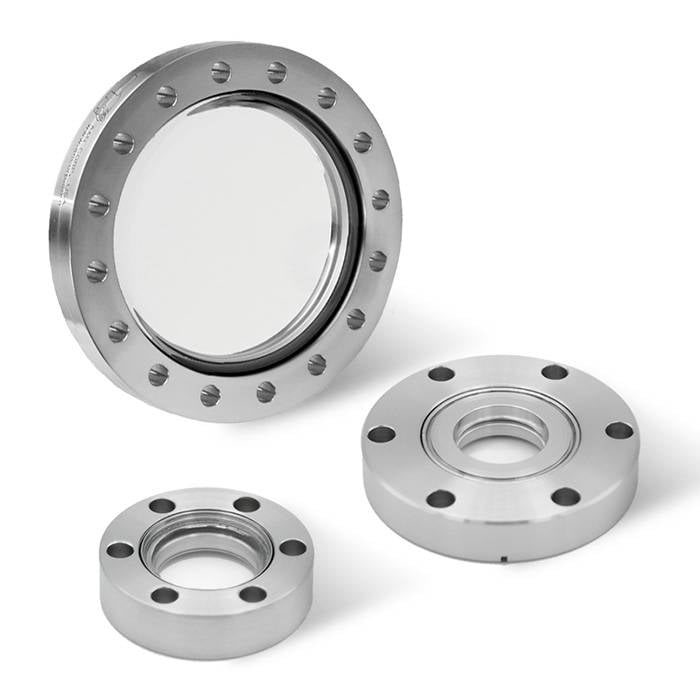
Moreover, as missions prolong their duration and range, the need for enduring resources becomes essential. Vacuum viewports are engineered to endure harsh environments, including high radiation and rapid heat shifts. By using innovative materials and engineering techniques, next-generation space missions can considerably lessen servicing and repair needs, ultimately aiding in longer missions and improving the complete security of human operations. This consistency is critical for deep-space missions, such as those planned for Mars and beyond or the outer solar system.
In conclusion, the merging of innovative tools with vacuum viewports provides new possibilities for remote operations and telepresence. Improvements in visual technologies and sensor technologies may allow astronauts to conduct activities and oversee systems from a protected distance, thus minimizing risks during extravehicular activities. As we expand the frontiers of cosmic discovery, vacuum viewports will be a vital element, delivering not only security and usefulness but also a clearer link to the vast cosmos that lies ahead exploration.